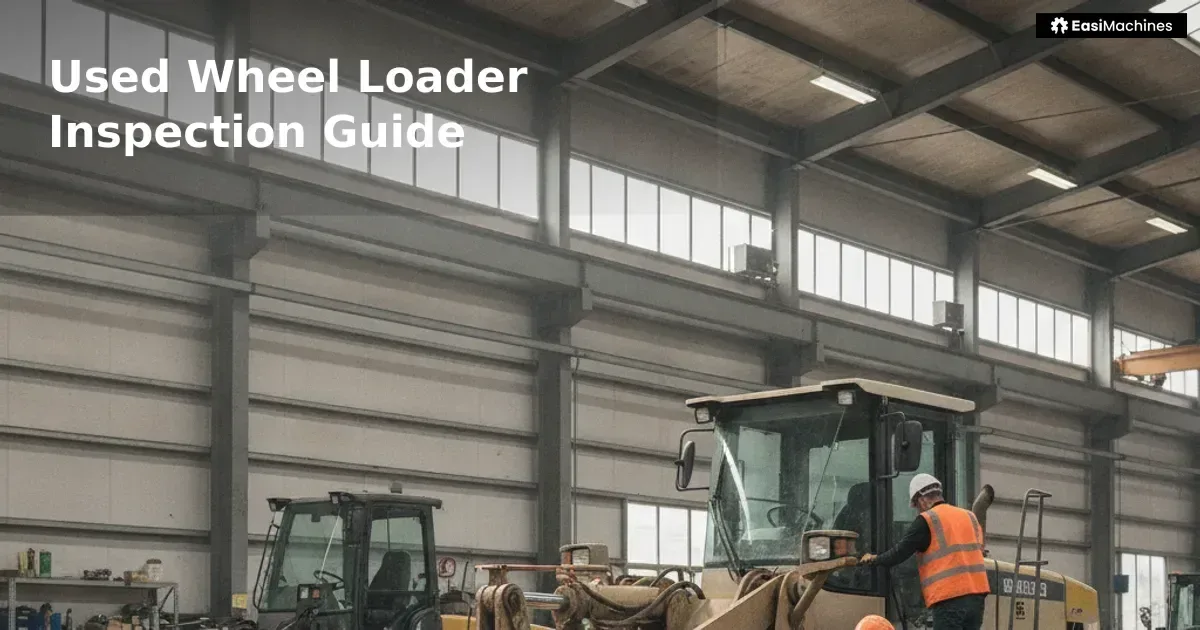
A used wheel loader can deliver years of productive work or drain cash in the first month — the difference usually comes down to five inspection areas most buyers rush through. Here is how to get it right before you commit.
The EasiMachines Editorial Desk·EasiMachines Editorial Team·September 13, 2026 · 6 min read
A used wheel loader can deliver years of productive work or drain cash in the first month — the difference usually comes down to five inspection areas most buyers rush through. Here is how to get it right before you commit.
The most expensive mistake a wheel loader buyer makes is spending inspection time on what is visible — paint condition, cab cleanliness, tyre tread at a glance — and almost none on what actually fails. Bucket cutting edges, articulation joint wear, and hydraulic cylinder seals are not photogenic, but each one carries a repair bill that can wipe out any discount negotiated on the sale price. A thorough walk-around takes roughly ninety minutes. If a seller will not give you that time, treat the refusal as a red flag and move on.
Bucket and Attachment Wear
The bucket is the machine's primary earning tool, and it absorbs the most punishment. Start at the cutting edge — the replaceable hardened steel strip along the bucket's bottom lip. A new cutting edge is typically 25–30 mm thick; anything below 10 mm means near-term replacement. Measure it with a caliper or a simple steel rule, not by eye. While you are there, check the bucket floor plate for punch-through cracks or weld repairs: a cracked floor has usually been overfilled or dropped onto hard material repeatedly, which stresses the lift arms and loader frame as well.
Run the bucket through a full curl cycle — crowd it fully back, then roll it fully forward — and watch the bucket pins and side wear plates (the metal strips at each bucket corner that protect the frame ears). Side wear plates should sit flush or close to it; a gap of more than 5 mm at the bucket ear indicates worn or loose pins, which cause bucket chatter during loading and accelerate stress on the linkage. Replacement pins and bushings are inexpensive, but a worn linkage pin bore that has gone oval requires machining and is a different cost conversation.
Articulation Joint and Steering
A wheel loader steers by bending at its centre — the front and rear frames pivot around a vertical joint called the articulation joint. This joint carries the full dynamic load of the machine turning under load, so its wear is a direct indicator of how hard the machine has been worked and whether lubrication was maintained. To check it: with the engine running and the parking brake set, have a second person rock the steering wheel sharply left and right while you watch the articulation joint from the side. Any visible lash — a brief pause before the frame responds — points to worn pivot pins or bushings. A well-maintained machine should respond almost instantly with no visual slack.
Grease fitting count matters here. A full-size articulated loader typically has 30–50 grease nipples across the frame, linkage, and axle joints. Pull several random fittings and look for fresh, uncontaminated grease. Dry or gritty nipples tell you the service intervals were not being met, and the wear pattern inside the joint bores will reflect that.
Hydraulic System Check
The hydraulic system powers lift, tilt, and steering simultaneously, and a compromised system shows up clearly if you run the right sequence. Start with a cold check: before warming the engine, look underneath each lift arm cylinder and tilt cylinder for oil weeping or dried streaks running down the chrome rod. Active seepage on a cold machine means the seals are already failing; dried streaks are worth noting but may indicate a past repair. Check the hydraulic tank sight glass — fluid should be clean amber to light yellow, not dark brown or milky. Milky fluid means water contamination, which will have been circulating through every seal and valve body in the system.
After warming the engine to operating temperature, raise the bucket to full height and hold it there for two minutes with the engine at idle. The bucket should not drift down more than 50–75 mm over that period; more than that indicates worn lift cylinder seals or a leaking load-check valve. Next, crowd the bucket fully back against the stops and apply moderate downward pressure by pushing on the bucket edge — the system should hold without creeping. Finally, run the bucket through rapid back-to-back cycles at full engine speed and listen for cavitation noise (a high-pitched rattling or whining from the pump). Cavitation means the pump is starved of fluid or has internal wear; either is a significant cost.
Tyres, Axles, and Undercarriage
Wheel loader tyres are large, load-rated items — an L5 or L5S compound tyre on a 20-tonne machine can cost more than many buyers expect, sometimes a significant portion of the total machine price depending on size and brand. Measure remaining tread depth with a tread gauge, not by eye: most loader tyres have a service limit around 25–30% of original tread depth remaining, below which heat buildup becomes a failure risk under load. Check for sidewall cracking, chunking (missing tread blocks), and bead damage. A single repairable tyre is a negotiating point; two or more tyres in poor condition is a known cost you need to price into your offer before agreeing a number.
At each axle, look for oil weeping around the hub reduction (the planetary gear set inside the wheel hub that gives the axle its final drive ratio). A ring of dried oil around the hub face is common on older machines and typically means a worn axle shaft seal — a moderate repair. A fresh oil leak at the hub, combined with discoloured or overheated paint on the hub face, suggests the axle oil level has been running low, which accelerates planetary gear wear to the point of failure. Drain the axle oil from one hub if the seller allows it, and check for metallic particles.
Hours, Age, and Price Expectations
A wheel loader's hour meter is the starting point for valuation, not the final answer. As a working reference: machines in the 0–3,000 hour range are typically low-use and command near-new pricing, especially if recent; 3,000–6,000 hours represents the productive middle of a machine's life where value drops predictably and maintenance records matter most; 6,000–10,000 hours is where major component history — engine overhaul, transmission rebuild, axle work — becomes the real question; above 10,000 hours, buy on the strength of documented rebuilds or expect to budget for them. These bands are a starting framework only. A 5,000-hour machine that has been maintained by a professional fleet operator with full records is a safer purchase than a 2,500-hour machine with no service history and fresh paint over rust.
Hour meters can be tampered with on older machines with analogue displays. Cross-reference the displayed hours against wear patterns: if the machine shows 3,000 hours but the steering wheel, seat bolster, and foot pedals are all heavily worn, the hours are likely understated. Ask for any service invoices, filter receipts, or fleet telematics data the seller can provide. The absence of any documentation on a machine claimed to be well-maintained is itself information.
Where EasiMachines Helps — and Where It Does Not
EasiMachines lists used wheel loaders with available details on hours, specification, and asking price, which gives you a working comparison set when you are trying to judge whether a private seller's price is in line with the market. Browsing active listings for similar makes, models, and hour ranges is a practical way to build a price reference before you negotiate — treat it as directional market context, not a certified valuation. The listing photos and seller-stated condition notes are a starting point; they do not substitute for a physical inspection of the five areas covered in this guide.
EasiMachines does not currently offer a verified third-party inspection service or a structured certification programme for used wheel loaders. For any machine above your comfortable loss threshold, commission an independent inspection from a qualified heavy equipment assessor or the relevant dealer's service department before exchange of funds. That cost — typically modest against the machine price — is the one pre-purchase spend that consistently returns its value.
About the author
The EasiMachines Editorial Desk
EasiMachines Editorial Team
Written and reviewed by the EasiMachines editorial team.