Match the Trailer to the Freight First
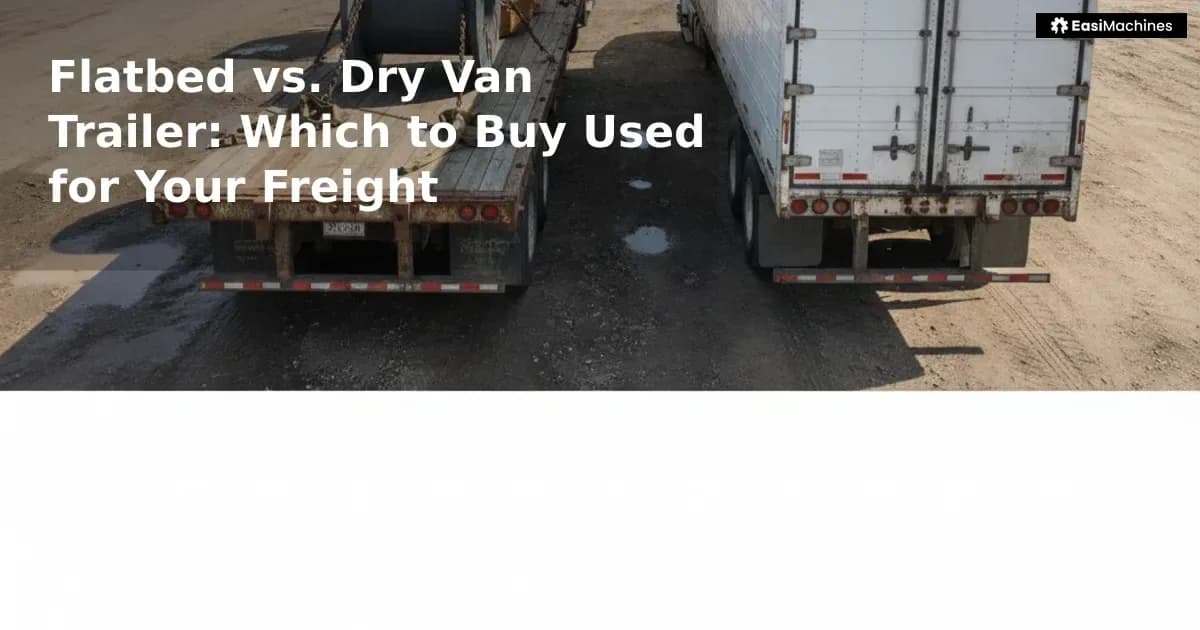
Before inspecting a single trailer, define your load profile in concrete terms: what commodity, what dimensions, what weight, and what loading setup exists at origin and destination. A flatbed works best when cargo is rigid, self-supporting, and either oversized for a van or loaded from the side or top by crane, forklift, or overhead equipment. Steel beams, construction machinery, precast concrete sections, bundled pipe, and heavy equipment are natural flatbed freight. A dry van works best when cargo is palletized or boxed, moisture-sensitive, theft-attractive, or loaded by dock-level forklift. Consumer goods, bagged agricultural product, electronics, and pharmaceutical freight belong in a van.
The practical question is whether your customers have docks. A standard dry van loads and unloads at a dock leveler between roughly 48 and 52 inches off the ground. If your primary stops are construction sites, agricultural yards, lumber yards, or manufacturing plants with ground-level or crane loading, those locations rarely have docks, and a flatbed almost always fits. If your customers are retail distribution centers, food warehouses, or any facility built for over-the-road trucking, they almost always have docks and expect a van. Trying to serve dock-dependent customers with a flatbed means tarping, strapping, and improvising — that cost adds up fast and the customer will notice.
Weight is a secondary filter. Both trailer types can reach legal gross vehicle weight limits on a standard five-axle combination, but a flatbed's deck itself is lighter — typically 6,000 to 7,500 lbs for a 48-foot steel flatbed versus 13,000 to 15,000 lbs for a comparable dry van. That tare weight difference translates directly into payload capacity. If you haul dense, heavy material where every legal pound matters, a flatbed delivers more net cargo per trip. If your loads are bulky but light, the van's extra tare weight rarely bites you.
Structural Inspection: Flatbed
A used flatbed has no walls or roof to inspect, which makes the inspection faster in some respects but leaves the deck and frame with nowhere to hide damage. Work through these points systematically.
- Deck surface: Walk the full length looking for cracked, split, or missing deck boards (on wood-over-steel construction) or visible corrosion pitting on all-steel decks. Soft spots underfoot on a wooden deck indicate rot below the surface, often around stake pockets where water pools.
- Stake pockets: These are the recessed steel receivers along the deck edge used to secure side boards and cargo restraints. Check each one for cracked welds, elongated openings from overloading, or missing pocket liners. Damaged pockets make legal cargo securement difficult.
- Cross-members: Crouch at deck level and sight along the underside. Bent, cracked, or missing cross-members (the lateral steel supports beneath the deck) are a structural defect, not a cosmetic one. Budget a proper repair before the trailer earns anything.
- Outriggers and neck: On spread-axle or extendable flatbeds, check the sliding mechanism for seized or badly worn rails. Extend and retract it by hand or with the crank — it should move without binding.
- Tie-down hardware: Count the working tie-down anchor points. Federal regulations in the US require a minimum working load limit across all tie-downs that meets or exceeds the cargo weight; rusted, bent, or missing anchor loops reduce that capacity and create compliance risk. Check the actual WLL (working load limit) stamp on each ring or strap anchor.
- Frame rails: Sight down each main rail from the rear. Any lateral bow or vertical sag visible to the naked eye warrants a frame measurement before purchase.
- Lights and wiring: Flatbed wiring is exposed to road debris, cargo dragging, and tarp abrasion. Check every running light, marker light, and brake light; look for spliced or bare wires along the frame.
Structural Inspection: Dry Van
A dry van's enclosed structure gives it more inspection surface area. The roof, walls, floor, and doors all carry structural and weatherproofing responsibility, and failure in any one of them can damage a full load.
- Roof: Stand inside and look up. Daylight showing through anywhere is a failed seal or a puncture — any gap will admit rain. Check the front header and rear door header specifically; these corners take stress from body flex.
- Sidewalls: Run a hand along the interior lining. Delamination (the inner lining separating from the outer skin) appears as bubbling or soft sections. Delaminated panels lose insulating value and can collapse inward under load pressure.
- Floor: Walk the full length heavily. Soft spots indicate rotted or broken cross-members beneath the composite or hardwood floor. A standard van floor should support forklift entry — typically 6,000 to 8,000 lbs on a single forklift axle — and soft spots fail that requirement.
- Rear doors: Open and close both doors fully. Check the hinges for hairline cracks at the weld points, and check the door seals (the rubber gaskets around the frame) for compression — a good seal compresses evenly and springs back; a dead seal leaves visible gaps. Broken door seals are cheap to replace but confirm the trailer's maintenance history.
- Undercarriage: Check the I-beam main rails for rust penetration, not just surface scale. Probe suspect areas with a screwdriver — if it sinks in, the rail has corroded through. Check the landing gear (the front support legs) for straightness and functioning crank mechanism.
- Nose plate and wall-to-floor join: Water entry at the nose often collects at the front floor join. Lift the floor lining at the front if accessible; black staining or soft material here means chronic water ingress.
- Tandem axle adjustment: The slider mechanism that moves the rear axle tandem forward or back for weight distribution should move freely. Seized sliders are a common and costly repair on high-mileage vans.
Resale Differences to Factor Into Your Purchase Price
Both trailer types hold value reasonably well compared to trucks, but their resale dynamics differ in ways that affect what you should pay today. Dry vans in good condition are consistently in high demand from a wide buyer pool — general freight carriers, owner-operators, and small fleets all need them, so a sound used van sells relatively quickly and to a broad market. Flatbeds sell to a narrower buyer pool: carriers serving construction, heavy haul, and industrial sectors. That narrower pool means resale can take longer and price is more sensitive to regional demand. If you are in a market with active construction or manufacturing, flatbed resale is healthy. In a market dominated by general freight, it softens.
Condition thresholds matter more on a flatbed at resale. Deck condition and tie-down integrity are the first things an experienced buyer checks, and a worn or repaired deck is visible immediately. Budget accordingly: if you are buying a used flatbed with a deck that needs boards replaced or pockets rewelded, factor that cost in at purchase rather than hoping to recover it on resale. A dry van's condition is somewhat more forgiving to a buyer's eye if the floor is sound and the doors seal, because cosmetic sidewall scuffs are expected on working equipment. Neither type should be bought purely as a resale play — buy for the freight you will actually haul and let the resale look after itself.
Where EasiMachines Helps and Where It Does Not
EasiMachines lists used trailers from dealers and private sellers, including flatbeds and dry vans across multiple markets. The search filters allow you to narrow by trailer type, length, and listed condition, which helps you build a comparison set of what is actually available and priced in your area rather than relying on asking prices from a single source. Using several active listings as a reference range gives a directional read on market pricing — treat that as a starting point for negotiation, not a certified valuation.
EasiMachines does not carry out physical inspections, verify structural condition, or authenticate seller claims about maintenance history. The freight-matching decision — flatbed or van — is entirely yours based on the load profile process described above. No marketplace listing replaces a walk-around inspection by someone who knows what a failed stake pocket weld or a delaminated sidewall actually looks like in person. If you are buying remotely or without mechanical experience, engage an independent transport equipment inspector before committing funds.
Frequently asked questions
Can I haul palletized freight on a flatbed if I tarp it?
You can, but it is rarely competitive. Tarping palletized loads correctly takes time, adds tarp and strap equipment cost, and still does not protect cargo as reliably as an enclosed van. Most shippers moving palletized goods prefer a van for both damage liability and insurance reasons. Flatbeds with tarped freight make sense when the load is too large or heavy for a van, not as a routine workaround for palletized cargo.
What trailer length should I buy used?
The 48-foot and 53-foot lengths dominate the used market and offer the widest buyer pool at resale. A 53-foot dry van is the most common general freight configuration in North America and moves quickly used. A 48-foot flatbed is standard for heavy haul and construction freight, though some states and corridors restrict 53-foot flatbeds due to overhang rules. Confirm the length restrictions on your primary lanes before buying anything longer than 48 feet for flatbed use.
How many years or miles is too old for a used trailer?
Age and mileage are less reliable guides for trailers than for trucks, because trailers are passive equipment — a well-maintained 15-year-old van can outlast a neglected 8-year-old one. Focus on structural condition rather than model year: floor integrity, frame rail corrosion depth, door seal function, and deck condition on a flatbed tell you more than the year of manufacture. A pre-purchase inspection is the only reliable age proxy.
Is a steel flatbed deck better than aluminum?
Steel decks are heavier, more repairable in the field, and less expensive to replace board sections on — a single steel board can be cut and welded in a basic shop. Aluminum decks save 1,000 to 1,500 lbs of tare weight, which is meaningful if you haul near gross weight limits regularly, but aluminum repairs require a certified welder and the material cost is higher. For most general flatbed work, steel is the practical choice. If maximum payload on every load is your business model, aluminum is worth the price premium.
Do I need a refrigerated trailer instead of a dry van for food freight?
Dry freight food — packaged shelf-stable goods, bagged grain, canned product — moves in a standard dry van. Temperature-controlled food, fresh produce, dairy, meat, and any product with a cold chain requirement needs a refrigerated trailer (reefer), which is a separate equipment category with significantly higher purchase price, operating cost, and maintenance complexity. Do not assume a dry van covers food freight without confirming the commodity's temperature requirements with the shipper.